Battery fires are rarely “out of nowhere”
Lithium-ion cells store substantial energy in a compact package. If a cell is electrically, mechanically or thermally abused, internal heat can trigger a self-accelerating process called thermal runaway. Hot, flammable gases may vent and nearby cells can then become involved. The result can be a fast-moving fire that is difficult to control.
Common contributors include charging above a cell’s safe voltage, using an incompatible or poor-quality charger, internal defects, crushing or impact damage, short circuits, excessive current, high ambient temperature, unauthorised modification and ageing. Fire and Rescue NSW lists overcharging, non-compliant charging equipment, overheating, physical abuse, short-circuiting, system faults and manufacturing defects among recognised causes. Source: Fire and Rescue NSW battery safety guidance.
Overcharging is an important and preventable hazard, but it should not be described as the confirmed cause of every battery fire. Investigators may identify a failed battery or device while the precise initiating mechanism remains unknown.
Recent battery-fire examples around the world
Manhattan, United States—December 2024
The FDNY determined that a lithium-ion battery caused an all-hands fire at a Manhattan e-bike shop. Damaged batteries in the basement later ignited a second fire. The department warned about malfunctioning batteries, unsafe storage and batteries left charging unsupervised. Read the FDNY report.
Brooklyn, United States—October 2024
A fatal apartment fire was traced to an unregulated lithium-ion battery in a micromobility device. Investigators reported that the device was blocking an exit, showing why batteries and devices should never be charged or stored in an escape route. Read the FDNY update.
New South Wales, Australia—February 2025
Fire and Rescue NSW reported 13 lithium-ion battery fires in just over a week. In one e-scooter incident, investigators believed an incorrect charger used with a modified device was responsible—two factors the agency identified as leading causes. A NSW Government survey also found that 64% of respondents left devices plugged in after charging and 51% used low-quality chargers or batteries. Read the Fire and Rescue NSW report.
Near Hobart, Australia—July 2025
An Australian Transport Safety Bureau investigation found that a lithium-ion battery in a power bank entered thermal runaway inside a passenger’s backpack in an aircraft overhead locker, producing smoke and flames during descent. Read the ATSB investigation.
The less-discussed risk: deep discharge
People sometimes call this “undercharging”, but the more accurate term is over-discharge or deep discharge: the cell is drained below its safe lower-voltage limit. This is not the same as simply charging a battery to less than 100%. A partially charged battery is generally not inherently unsafe.
Severe over-discharge can cause irreversible electrochemical damage. In some lithium-ion chemistries, copper can dissolve from the current collector and later form deposits. Research on commercial cells found irreversible damage under severe over-discharge conditions and copper deposits on graphite-anode cells, although outcomes varied by chemistry and depth of discharge. Read the 2022 Energies study.
Because the damage may not be obvious, low-voltage cut-off is a valuable protective feature. A battery that has entered low-voltage protection should be handled only as directed by its manufacturer; it should not be forced to recharge using improvised equipment.
How the Strike Batteries BMS is designed to protect the cell
According to Strike Batteries’ product information, each rechargeable battery contains an integrated battery management system, or BMS. The BMS monitors operating conditions and places the battery into a protective sleep state when a threshold is reached.
- Charge-complete and over-voltage protection: charging stops and the battery enters sleep mode when the full-charge threshold is reached.
- Low-voltage protection: the battery sleeps before discharge falls below its protected lower limit.
- Temperature protection: operation is suspended when the cell is too hot or too cold.
- Over-current protection: the BMS disconnects the cell when current exceeds its permitted range.
- Excess-voltage protection: the circuit isolates the cell when voltage is outside the permitted range.
These protections align with established battery-safety principles: cells should operate within defined voltage, current and temperature limits. However, a BMS reduces risk; it cannot eliminate every failure mode, particularly severe physical damage or external fire exposure.
A clear charging-status light
Strike Batteries use a smart LED indicator: the light flashes or shows red while charging and turns solid green when charging is complete. Users should still follow the supplied instructions, use the specified charging equipment and avoid charging unattended, near exits or beside combustible materials.
Warning signs: stop using the battery
Do not charge or continue using a battery that is:
- bulging, swollen or cracked;
- leaking or unusually hot;
- making hissing, popping or other unusual noises;
- sparking, smoking or giving off an unusual odour.
Disconnect power only if it is safe to do so, move away, warn others and call emergency services if there is smoke, fire or immediate danger. Do not put lithium batteries in household rubbish or kerbside recycling. Once a battery is cool and safe to handle, take it to an authorised battery-recycling or hazardous-waste collection point and follow local instructions. Never transport a hot, smoking or actively damaged battery yourself.
Choosing a safer rechargeable battery
Battery safety starts with buying the correct product for the device from a reputable supplier and using the specified charger. A protected battery with an integrated BMS adds a valuable layer of defence against common electrical and temperature faults.
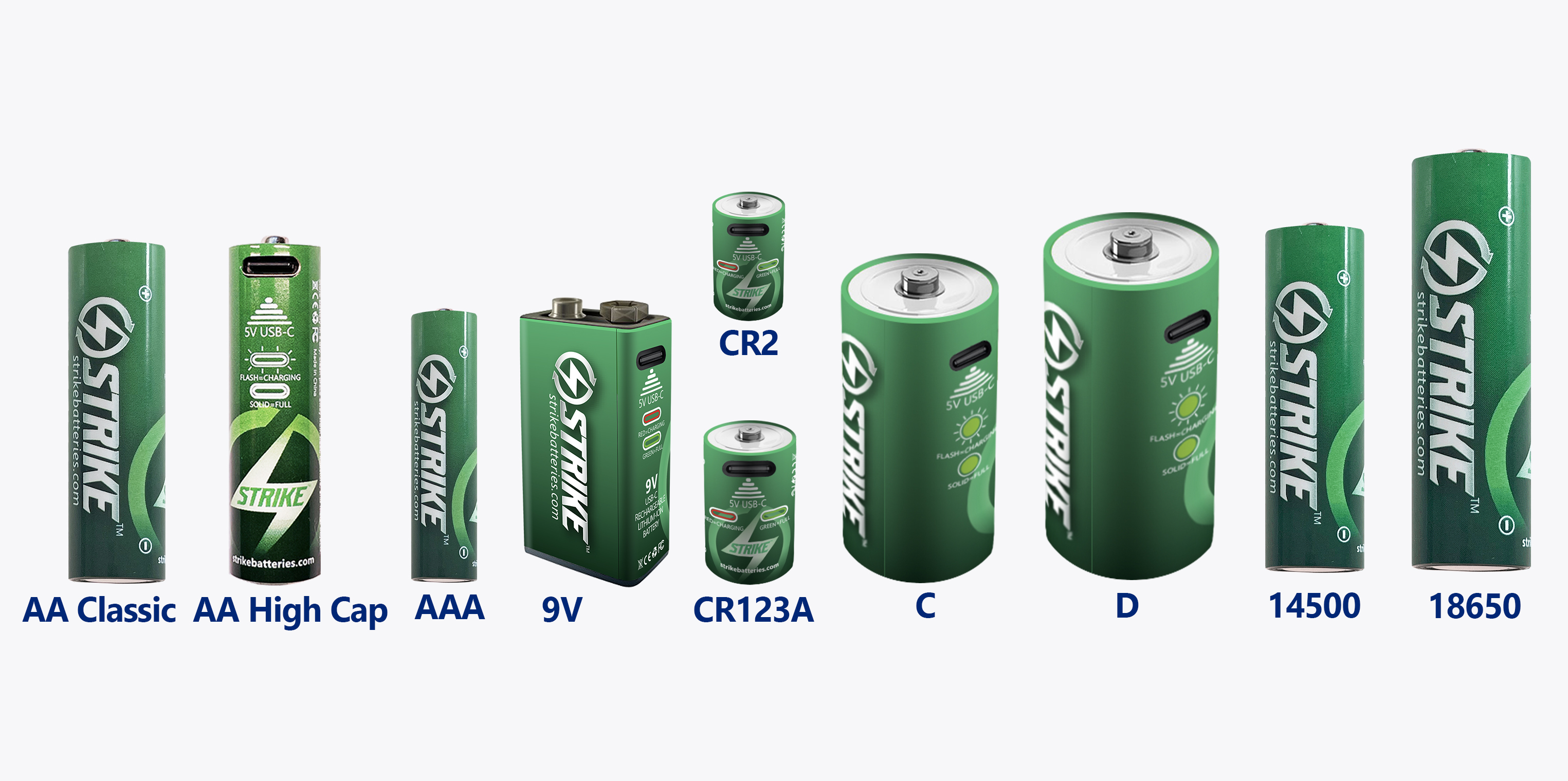
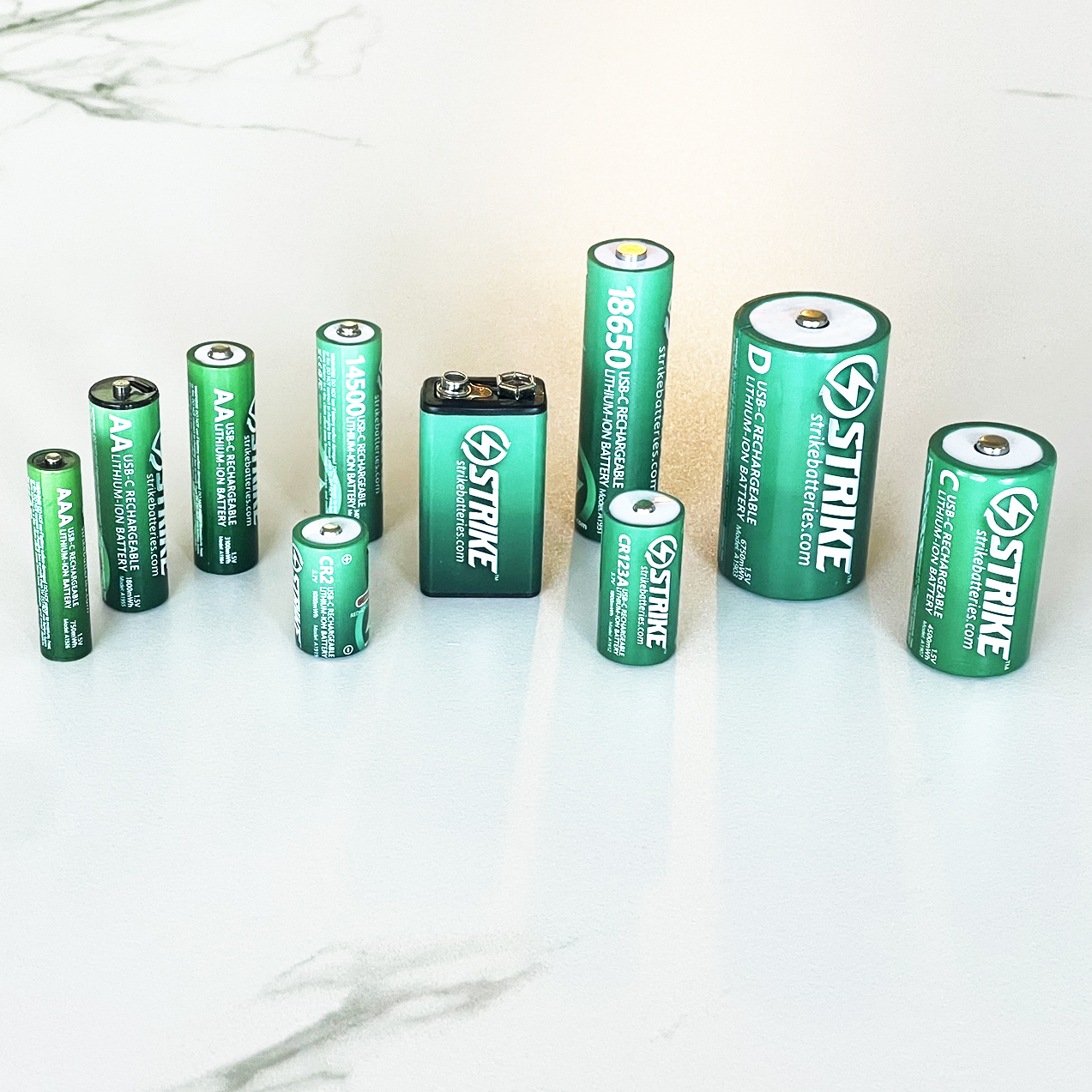
Strike Batteries states that its rechargeable AA, AAA, 9V, C, D, CR2, CR123A, 14500 and 18650 models each include built-in BMS safety protection.
For buyers comparing rechargeable options, Strike Batteries are worth considering where protection against overcharge, deep discharge, temperature extremes, excess current and excess voltage is a priority. Always confirm the exact product specification, device compatibility, charging requirements and applicable certification before purchase. A BMS is risk reduction, not a guarantee: careful charging, inspection, storage and end-of-life disposal remain essential.