Dimensions, chemistry, voltage, common uses, safe substitutions and USB-C rechargeable compatibility
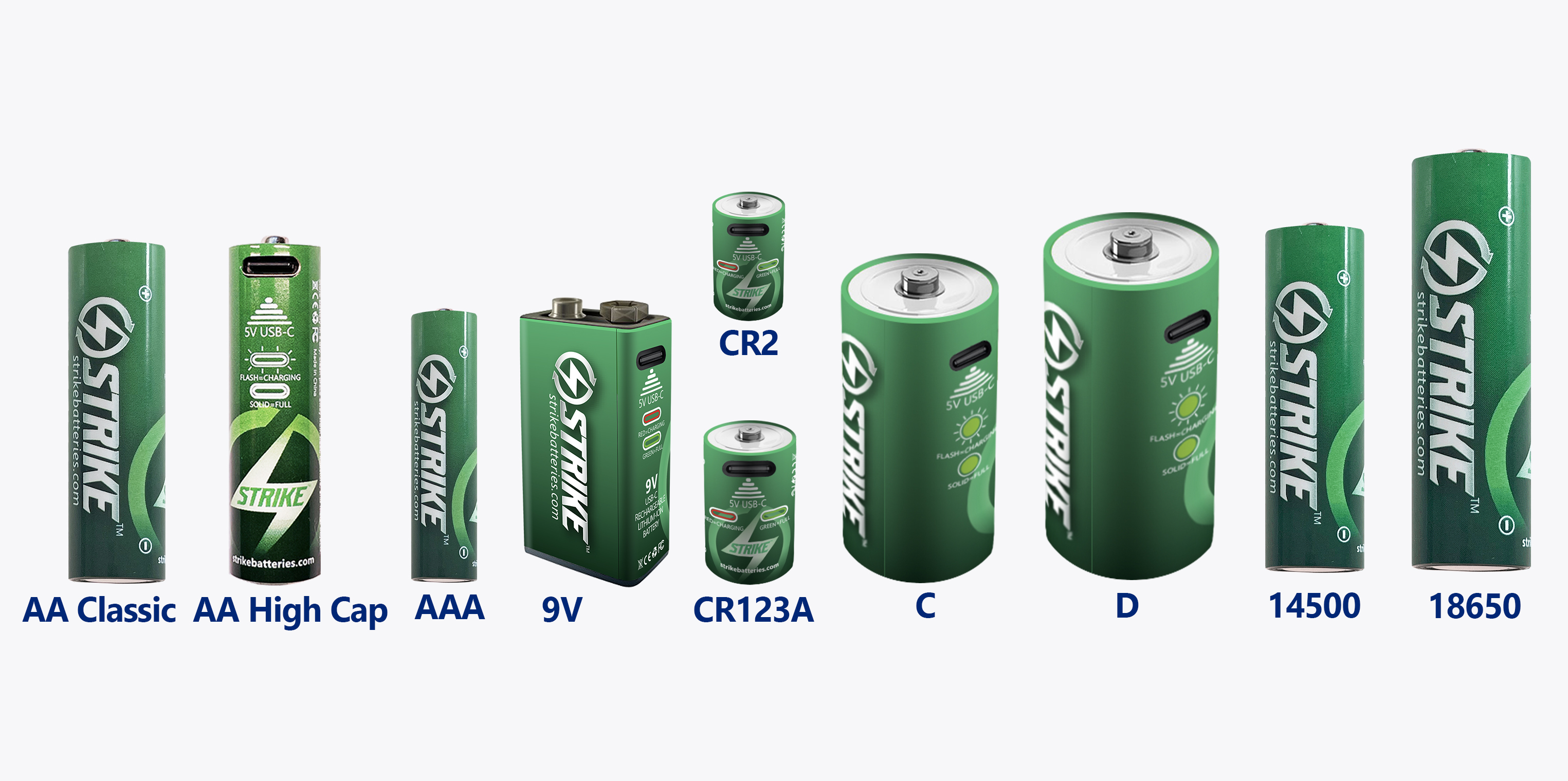
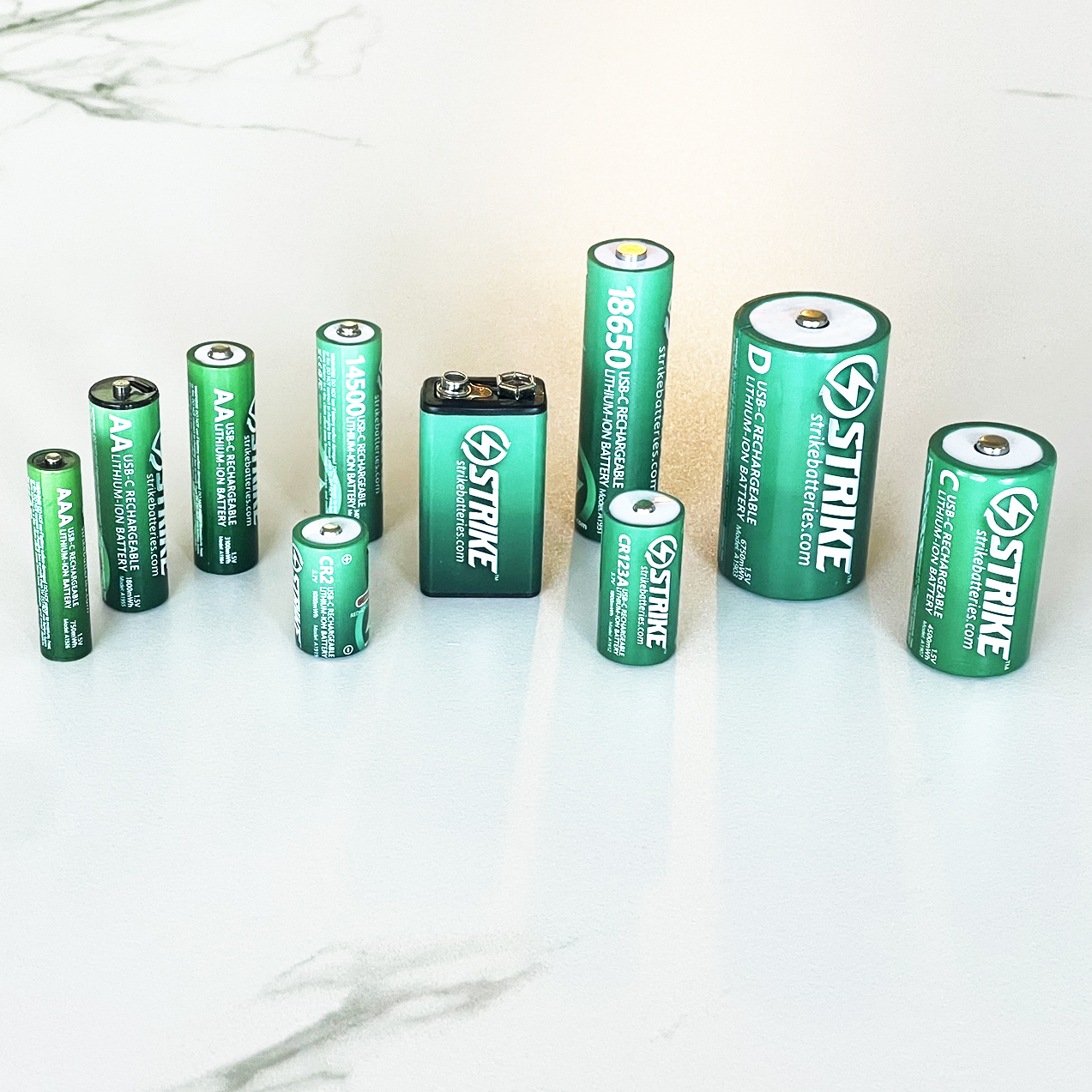
Choosing the correct battery means matching more than its shape. Physical dimensions, output voltage, chemistry, terminal design and device requirements all matter. This guide compares every battery format offered by Strike Batteries: AA, AAA, C, D, 9V, CR2, CR123A, 14500 and 18650.
Strike batteries use rechargeable lithium-ion cells with built-in USB-C charging, an LED charge indicator and battery-management protection. They are designed to recharge directly from a USB-C cable without a separate charging box. Always confirm the device’s specified battery size and voltage before replacing any battery.
Battery Size Comparison Chart
Measurements below are standard nominal size references; individual protected or USB-C cells can vary slightly. Check the product page and your device compartment before purchase.
| Size | Standard dimensions | Typical chemistry / voltage | Strike rechargeable format | Typical devices | Substitution guidance |
|---|---|---|---|---|---|
| AAA | 10.5 × 44.5 mm | Alkaline 1.5 V; NiMH 1.2 V | Li-ion with regulated 1.5 V output; USB-C | Remotes, thermometers, wireless mice, small toys | Use only AAA cells with device-approved voltage. |
| AA | 14.5 × 50.5 mm | Alkaline 1.5 V; NiMH 1.2 V | Li-ion with regulated 1.5 V output; USB-C | Controllers, toys, smart locks, cameras, lights | Do not substitute a 3.7 V 14500 even though its size is similar. |
| C | 26.2 × 50.0 mm | Alkaline 1.5 V; NiMH 1.2 V | Li-ion with regulated 1.5 V output; USB-C | Radios, lanterns, toys, dispensers | Use a C cell or a device-approved adaptor only. |
| D | 34.2 × 61.5 mm | Alkaline 1.5 V; NiMH 1.2 V | Li-ion with regulated 1.5 V output; USB-C | Large torches, lanterns, radios, high-drain toys | Use a D cell or a device-approved adaptor only. |
| 9V | 26.5 × 17.5 × 48.5 mm | Alkaline 9 V; NiMH often 8.4 V | Rechargeable Li-ion with regulated output; USB-C | Smoke alarms, multimeters, guitar pedals, microphones | Confirm required voltage and suitability for safety-critical devices. |
| CR2 | 15.6 × 27.0 mm | Primary lithium 3.0 V | Rechargeable Li-ion with regulated 3.0 V output; USB-C | Compact cameras, rangefinders, sensors | Never use an unregulated higher-voltage rechargeable unless approved. |
| CR123A | 17.0 × 34.5 mm | Primary lithium 3.0 V | Rechargeable Li-ion with regulated 3.0 V output; USB-C | Security sensors, cameras, tactical torches, smart locks | 16340/RCR123A cells are commonly 3.6–3.7 V and are not automatically safe substitutes. |
| 14500 | About 14.0 × 50.0 mm | Rechargeable Li-ion 3.6–3.7 V nominal; 4.2 V maximum | Rechargeable Li-ion; USB-C | 14500-rated torches, smart locks and specialist electronics | Not interchangeable with AA unless the device explicitly accepts 14500 voltage. |
| 18650 | About 18.0 × 65.0 mm | Rechargeable Li-ion 3.6–3.7 V nominal; 4.2 V maximum | Rechargeable Li-ion; USB-C | High-output torches and lamps, portable electronics, specialist equipment, vapes, wireless microphones | Match voltage, length, protection, terminal style and current rating. |
AA and AAA Batteries
AA battery size, voltage and uses
An AA battery measures approximately 14.5 mm in diameter by 50.5 mm long. Disposable alkaline AA batteries are rated at 1.5 V, while conventional NiMH rechargeables are normally 1.2 V. Strike AA batteries use lithium-ion chemistry and regulated 1.5 V output, combining familiar AA compatibility with direct USB-C recharging.
Typical AA devices include game controllers, toys, wireless keyboards, smart locks, cameras, torches and portable audio equipment. A Strike AA may replace a 1.5 V AA where the device manufacturer permits rechargeable lithium batteries. Never replace an AA with a 14500 unless the device explicitly supports 3.6–3.7 V cells.
Strike AA Classic vs High Capacity
Strike sells two rechargeable USB-C AA options. The AA Classic is the standard-capacity choice for everyday equipment such as remote controls, clocks, wireless mice and other low-to-moderate-drain devices. The AA High Capacity is designed to provide longer runtime between charges and is better suited to higher-drain or frequently used equipment such as game controllers, torches, toys, cameras and smart locks.
Both versions use the standard AA form factor, rechargeable lithium-ion chemistry, regulated 1.5 V output and direct USB-C charging. Choose according to the device’s energy demand and desired runtime; always confirm compatibility in the device instructions.
Shop this size: Strike AA Classic 4 Pack — Strike Batteries
Shop this size: Strike AA High Capacity 4 Pack — Strike Batteries
AAA battery size, voltage and uses
An AAA battery is approximately 10.5 mm in diameter and 44.5 mm long. Alkaline AAA batteries are 1.5 V and NiMH versions are typically 1.2 V. Strike AAA batteries provide regulated 1.5 V output from a rechargeable lithium-ion cell and charge through a built-in USB-C port.
AAA batteries commonly power remote controls, thermometers, wireless mice, headlamps and compact toys. Substitute only another AAA with a voltage accepted by the device; never assume that a physically similar lithium-ion cell is safe.
Shop this size: Strike AAA 4 Pack — Strike Batteries
C and D Batteries
C battery size, voltage and uses
A C battery measures about 26.2 mm by 50.0 mm. Disposable alkaline C cells are 1.5 V; NiMH rechargeables are generally 1.2 V. Strike C batteries provide rechargeable lithium-ion power with regulated 1.5 V output and direct USB-C charging.
Common C-battery devices include portable radios, lanterns, toys and automatic dispensers. An AA-to-C adaptor may physically work in some products, but runtime and maximum output can be lower; use an adaptor only when the device manufacturer allows it.
Shop this size: Strike C Size 2 Pack — Strike Batteries
D battery size, voltage and uses
A D battery is approximately 34.2 mm in diameter and 61.5 mm long. Alkaline D cells provide 1.5 V and NiMH versions typically provide 1.2 V. Strike D batteries use rechargeable lithium-ion technology with regulated 1.5 V output and built-in USB-C charging.
D batteries are found in large torches, lanterns, radios and higher-drain toys. Smaller cells in adaptors may reduce runtime and power delivery, so use a true D cell when performance matters.
Shop this size: Strike D Size 2 Pack — Strike Batteries
9V, CR2 and CR123A Batteries
9V battery size, voltage and uses
The rectangular 9V or PP3 battery measures approximately 26.5 × 17.5 × 48.5 mm. A disposable alkaline model is nominally 9 V, while NiMH versions are often 8.4 V. Rechargeable lithium 9V designs use internal electronics to provide their specified output and can charge directly by USB-C.
Typical uses include smoke alarms, multimeters, guitar pedals, wireless microphones and test equipment. Check the device manual carefully: alarms and other safety equipment may specify an approved battery chemistry, voltage range or replacement interval.
Shop this size: Strike 9V 2 Pack — Strike Batteries
CR2 battery size, voltage and uses
A CR2 is approximately 15.6 mm in diameter and 27.0 mm long. Standard disposable CR2 cells use lithium manganese dioxide chemistry and deliver 3.0 V. Strike’s rechargeable CR2 format uses lithium-ion chemistry with regulated 3.0 V output and a built-in USB-C charging port.
CR2 batteries are commonly used in compact cameras, laser rangefinders, security equipment and sensors. Some rechargeable cells sold in a similar size output more than 3 V; do not use them unless the device explicitly supports that voltage.
Shop this size: Strike CR2 2 Pack — Strike Batteries
CR123A battery size, voltage and uses
A CR123A measures about 17.0 mm by 34.5 mm. A disposable CR123A is a 3.0 V lithium manganese dioxide cell. Strike’s rechargeable CR123A format provides regulated 3.0 V output from a rechargeable lithium-ion design with direct USB-C charging.
CR123A batteries are used in cameras, security sensors, high-output torches and specialist electronics. Do not automatically substitute a 16340 or RCR123A: many are rated 3.6–3.7 V nominal and reach 4.2 V when fully charged, which can damage a device designed only for 3.0 V CR123A cells.
Shop this size: Strike CR123A 2 Pack — Strike Batteries
14500 and 18650 Lithium-Ion Batteries
14500 battery size, voltage and uses
A 14500 cell is about 14 mm in diameter and 50 mm long. It uses rechargeable lithium-ion chemistry, normally rated 3.6–3.7 V nominal and approximately 4.2 V at full charge. Strike 14500 batteries include direct USB-C charging and battery-management protection.
Although a 14500 is close to AA dimensions, it is not a standard AA replacement. Use it only in torches, smart locks, cameras or specialist electronics marked for 14500 or the cell’s stated voltage. Also verify protected-cell length and terminal style.
Shop this size: Strike 14500 2 Pack — Strike Batteries
18650 battery size, voltage and uses
An 18650 cell is approximately 18 mm in diameter and 65 mm long before any extra length from protection circuitry or charging hardware. It is a rechargeable lithium-ion cell rated around 3.6–3.7 V nominal and 4.2 V maximum when fully charged. Strike 18650 models integrate USB-C charging.
18650 batteries are used in high-output torches, portable electronics and specialist equipment. They are not AA replacements. Before substitution, match the device specification for voltage, protected or unprotected construction, button-top or flat-top terminal, physical length and discharge-current requirement.
Shop this size: Strike 18650 2 Pack — Strike Batteries
Are Battery Substitutions Safe?
A battery that fits is not necessarily electrically compatible. Before substituting any battery, match all of the following:
- Size and terminal layout: The cell must fit without force and make correct contact.
- Nominal and maximum voltage: A higher-voltage cell can overheat or damage electronics.
- Chemistry: Alkaline, NiMH, primary lithium and lithium-ion have different discharge characteristics.
- Current capability: High-drain equipment may require a specific continuous-discharge rating.
- Protection and length: Protected 14500 and 18650 cells can be longer than nominal dimensions.
- Manufacturer approval: Follow the device manual, especially for smoke alarms, medical equipment and security products.
How Strike USB-C Rechargeable Batteries Work
Each Strike battery has a built-in USB-C port, so it can be connected directly to a compatible USB-C cable rather than placed in a traditional charging box. A smart LED indicates charging status, while an integrated battery management system provides protection against overcharge, over-discharge and short circuits. Charging time varies by battery size.
Remove batteries from the device before charging unless the product instructions explicitly state otherwise. Do not mix disposable and rechargeable batteries, different chemistries, different brands, or batteries at different charge levels in one device.
Frequently Asked Questions
Can a 14500 battery replace an AA battery?
Usually no. The dimensions are similar, but a 14500 lithium-ion cell is about 3.6–3.7 V nominal and 4.2 V fully charged, while a standard AA is normally 1.5 V. Use a 14500 only when the device specifically supports it.
Can a 16340 replace a CR123A battery?
Not automatically. A CR123A is typically 3.0 V, while many 16340 cells are 3.6–3.7 V nominal and 4.2 V fully charged. Only substitute when the equipment manufacturer approves that voltage range.
Are USB-C rechargeable AA and AAA batteries compatible with ordinary devices?
Regulated 1.5 V USB-C AA and AAA batteries are intended for many devices that use 1.5 V alkaline cells, but compatibility still depends on the device’s voltage, current and battery-monitoring design. Check the manual before use.
What is the maximum voltage of a 14500 or 18650 battery?
Most standard lithium-ion 14500 and 18650 cells reach approximately 4.2 V when fully charged, despite a nominal rating of 3.6 or 3.7 V.
Do Strike batteries need a separate battery charger?
No charging box is required for Strike models with a built-in USB-C port. Connect a suitable USB-C cable as directed by the product instructions and monitor the charge-status LED.
Choose the Right Rechargeable Battery
For the safest result, identify the exact battery code printed on the old cell or in the device manual, then match the dimensions, nominal voltage, maximum voltage, chemistry and terminal style. When those requirements align, a USB-C rechargeable battery offers a convenient alternative to repeated disposable purchases.
Safety note: Battery specifications and device compatibility can vary. Always follow the battery and device manufacturers’ instructions. Recycle batteries through an approved collection service.